In a nutshell
Does it take a while to start, or does the flow stay weak once it starts? I’d ask how often each happens and what has been checked.
Everyday Explanation
Tell me whether you’re waiting, straining, or feeling like there’s still more left afterward. Those can happen together and are worth describing separately.
Clinical Expansion
I’d compare the symptom history with any assessment of emptying and other relevant medical findings. Once I know what’s already been checked, I’d consider whether there’s a reason to look at how the pelvic floor relaxes when you try to pee.
What would change my mind?
If you’re having trouble emptying your bladder, I’d want that checked medically first. A difficult start alone leaves several possible explanations.
Urinary hesitancy means it takes longer than expected for the stream to start. A slow or stop-start stream can occur alongside it. Possible contributors include an enlarged prostate or another obstruction, a bladder that contracts less effectively, medication effects, or difficulty relaxing the outlet. Similar symptoms can arise through different mechanisms. [1] [2]
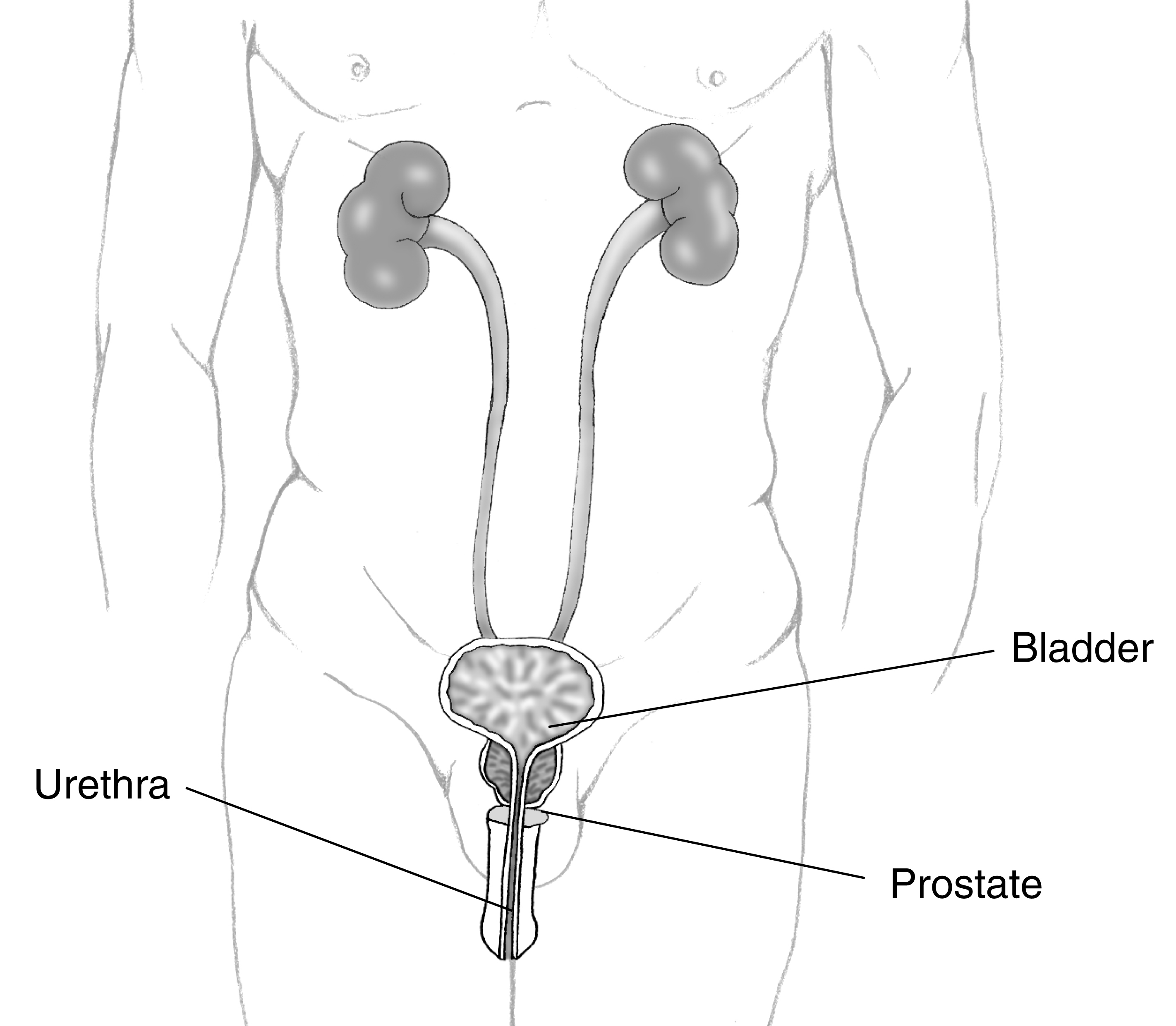
Emptying involves the bladder and outlet
The bladder normally contracts as the outlet relaxes. If the pelvic floor muscles stay active when you’re trying to pee, a clinician may investigate whether outlet coordination contributes. The feeling of tightness, a single physical finding, and the sound of a stream are each insufficient to determine the cause. [2]
What does a post-void residual tell me?
A post-void residual (PVR) is the volume left in the bladder after urinating. It answers how much was left on that occasion. A low reading can coexist with hesitancy or weak flow. A higher reading can reflect several mechanisms. A clinician may consider the symptom history, medication review, urinalysis, repeat measurements, a flow test or additional evaluation depending on the presentation. [2] [3]
Where to start
Report whether this is new, whether starting or maintaining flow is harder, and whether there is pain, infection, prior surgery or a medication change. Ask your clinician whether emptying, obstruction and other medical contributors need assessment. Do not use the diary to delay urgent evaluation. A sudden inability to urinate needs emergency care. [1]
Want to schedule a free hands-on evaluation?
I’m David Quenzer, DPT, a men’s pelvic health physical therapist in Clovis. We’ll talk through what you’ve noticed and see whether pelvic physical therapy makes sense for you.